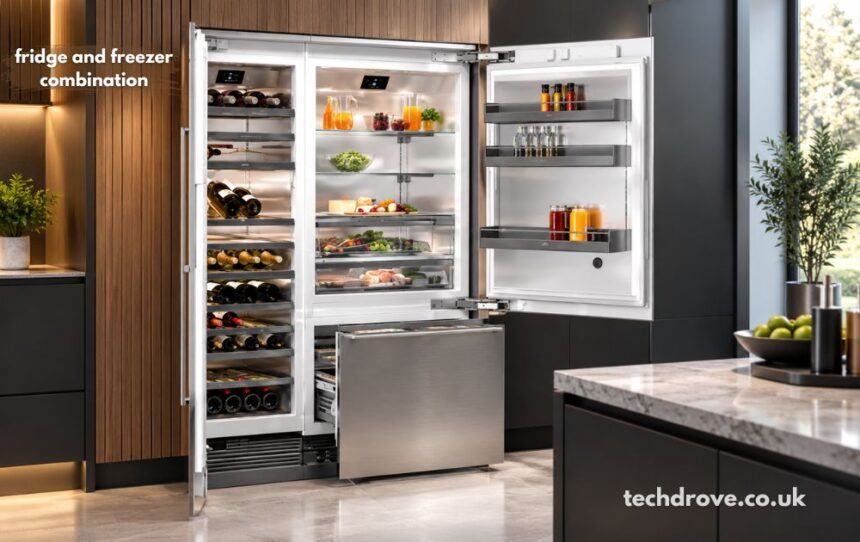
Opening your kitchen door to a cool, well-organized space feels quietly satisfying. A good fridge and freezer combination keeps fresh food crisp and frozen food safe, all in one place. This guide shares simple, helpful information to make your decision easier.
What Is a Fridge and Freezer Combination?
A fridge and freezer combination is one appliance with two separate cooling zones: a fresh-food compartment kept just above freezing, and a freezer compartment kept well below it. Each zone has its own door and its own temperature setting, so food stays safe in both. Because the unit shares one body and one power connection, it uses space wisely. This is why a fridge and freezer combination has become the standard choice in homes of every size.
Why Most Households Prefer One
Many families choose a fridge and freezer combination because it keeps daily cooking simple and organized. Fresh vegetables, dairy, frozen meat, and leftovers sit in one spot, so meal preparation feels smoother and quicker. You also pay for just one appliance, one repair service, and one energy connection. For most homes, a fridge and freezer combination offers the best balance of convenience, cost, and reliable storage without taking over the kitchen.
Main Types of Fridge and Freezer Combination
Each layout suits a different lifestyle, so it helps to know your options before you shop. Here are the most popular styles of fridge and freezer combination available today:
- Top-freezer: Affordable, simple, and long-lasting, with the freezer above the fresh-food section.
- Bottom-freezer: Places fresh food at eye level, so you bend less for everyday items.
- Side-by-side: Tall, narrow doors that work well in tight kitchens, with easy access to both zones.
- French door: Wide upper doors with a bottom freezer drawer, ideal for large trays and big families.
How to Choose the Right Size
Size is one of the most important choices when buying a fridge and freezer combination. A general guide is to allow around 100 to 150 litres of total capacity per person, then adjust for how often you shop and how much you freeze. A unit that is too small causes overcrowding, while one that is too large wastes electricity. Always measure your kitchen space, doorways, and door-opening room before buying your fridge and freezer combination.
Features Worth Looking For
Modern appliances come with many extras, but only a few truly improve daily life. When comparing a fridge and freezer combination, focus on features you will actually use:
- Frost-free cooling: Removes the need for manual defrosting.
- Adjustable shelves: Let you store tall bottles and large dishes easily.
- Crisper drawers: Help vegetables and fruit stay fresh longer.
- LED lighting: Brighter, cooler, and more efficient than older bulbs.
- Door alarm: Warns you if the door is left open.
- Quick-freeze option: Helpful after a big grocery trip.
Energy Efficiency and Running Costs
A fridge and freezer combination works around the clock, which makes it one of the biggest energy users in your home. Choosing a model with a high energy rating may cost more at first, but it often lowers your electricity bill every month. Inverter compressors are especially helpful, since they adjust cooling power smoothly instead of switching on and off sharply. Over many years, an efficient fridge and freezer combination can save a surprising amount of money while also running more quietly.
Frost-Free or Direct-Cool: Which One Suits You?
There are two common cooling systems, and each has its own character. A frost-free fridge and freezer combination uses a fan to circulate cold air, which prevents ice buildup and keeps temperatures even, though it usually costs a little more. A direct-cool model is cheaper and uses less power, but it needs occasional manual defrosting. If you value convenience and rarely have spare time, frost-free is gentler on your routine, while direct-cool suits tighter budgets.
Smart Ways to Organize Your Fridge and Freezer
A little organization helps your fridge and freezer combination keep food fresher for longer and reduces daily waste. Try these simple habits:
- Keep ready-to-eat food and dairy on upper shelves.
- Store raw meat and fish on the bottom shelf to prevent drips.
- Place vegetables and fruit in separate crisper drawers.
- Use the door only for sauces and drinks, since it is the warmest area.
- Label frozen items with dates and use the oldest first.
- Leave small gaps between items so cold air can circulate.
Ideal Temperature Settings
The right temperature protects both your food and your health. In a fridge and freezer combination, the fresh-food section should stay around 4°C, which slows bacterial growth without freezing your vegetables. The freezer should hold steady at -18°C, the standard level for safe long-term storage. A simple fridge thermometer costs very little and quickly shows whether your fridge and freezer combination is truly cooling as it should, especially during hot summer months.
Where to Place Your Appliance
Placement affects how hard your fridge and freezer combination has to work. Keep it away from ovens, stoves, and direct sunlight, because extra heat forces the compressor to run longer. Leave a few centimetres of space at the back and sides so warm air can escape freely. Make sure the floor is level, and the doors can open fully. In areas with unstable power, pairing your fridge and freezer combination with a voltage stabilizer adds helpful protection.
Simple Care and Cleaning Tips
Gentle, regular care can help your fridge and freezer combination last well beyond a decade. A few quick habits make a real difference:
- Wipe spills straight away to prevent odors and stains.
- Clean door seals monthly so they close tightly.
- Dust the back coils twice a year for better cooling.
- Let hot food cool before placing it inside.
- Defrost direct-cool models when ice reaches about 5 mm.
- Avoid keeping the door open longer than necessary.
Common Mistakes to Avoid
Most problems with a fridge and freezer combination come from small, avoidable habits rather than faulty parts. Watch out for these common errors:
- Choosing only by price and ignoring energy ratings.
- Skipping measurements, then struggling with delivery.
- Overfilling shelves, which blocks airflow.
- Setting the temperature too cold, which raises power use.
- Storing warm leftovers directly inside.
- Ignoring strange noises or a loose door seal.
Quick Buying Checklist
Before you finalize your purchase, a short checklist keeps the decision calm and clear. Review these points for your next fridge and freezer combination:
- Confirm the capacity matches your household size.
- Check the energy rating and compressor type.
- Choose frost-free or direct-cool based on your routine.
- Verify the warranty, especially on the compressor.
- Read honest customer reviews and service availability.
Conclusion
A fridge and freezer combination is a quiet helper that protects your food, your budget, and your time. When you consider size, type, efficiency, and care, the right choice becomes much clearer. Buy thoughtfully, use it kindly, and your fridge and freezer combination will serve your home reliably for many years.
FAQs about fridge and freezer combination
How long does a fridge and freezer combination last?
With proper care, most units last between 10 and 15 years.
What temperature should a fridge and freezer combination be set to?
Set the fridge to about 4°C and the freezer to -18°C.
Is a frost-free fridge and freezer combination worth the extra cost?
Yes, it saves time by removing the need for manual defrosting.
How much space should I leave around a fridge and freezer combination?
Leave a few centimetres at the back and sides for proper airflow.
Does a fridge and freezer combination use a lot of electricity?
Modern energy-rated models use far less power than older ones.