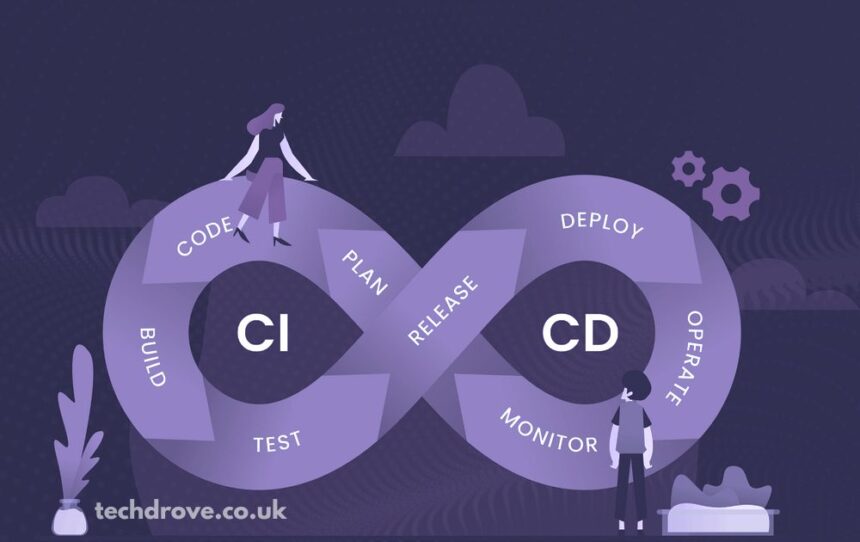
Every DevOps team eventually faces the same question: how do we ship code faster without breaking production? The answer almost always involves the right ci cd tools for devops. These tools automate testing, building, and deployment, turning what used to be a slow manual process into a smooth, repeatable pipeline.
What Are CI/CD Tools and Why Are They Important?
Ci cd tools for devops automate two connected processes: Continuous Integration (merging and testing code frequently) and Continuous Delivery or Deployment (releasing that code automatically). Without these tools, teams rely on manual checks that are slow and error-prone. With them, bugs get caught early, releases happen faster, and developers spend less time firefighting and more time building.
Why the Correct CI/CD Setup Is Essential for Every DevOps Team
Choosing the right devops tools for CI/CD isn’t just a technical decision; it directly affects how quickly and safely your team can deliver value to users.
- Reduces manual errors during testing and deployment
- Shortens the feedback loop between writing code and seeing results
- Improves collaboration between developers, testers, and operations
- Makes rollbacks and recovery faster when something breaks
- Builds a culture of accountability through visible pipelines
Important Characteristics of CI/CD Tools
Before picking any tool, it’s worth understanding what actually separates a strong CI/CD solution from a weak one.
- Integration of version control with Bitbucket, GitLab, or GitHub
- Scalability to support growing teams and larger codebases
- Built-in security scanning to catch vulnerabilities early
- Container support for Docker and Kubernetes-based workflows
- Real-time dashboards to monitor build and deployment health
- Pricing flexibility for both startups and large enterprises
2026’s Best CI/CD Tools for DevOps Teams
Here’s a closer look at the most widely used ci cd tools for devops teams today, each with its own strengths.
Jenkins: Jenkins remains one of the most popular open-source automation servers because of its massive plugin ecosystem. It gives teams complete control over their pipeline configuration, though it does require more setup and maintenance than newer cloud-native alternatives.
GitLab CI/CD: GitLab CI/CD is built directly into the GitLab platform, eliminating the need for a separate tool. Its simple YAML-based setup and tight integration with source code and security scanning make it a favorite among DevOps tools for CI/CD.
GitHub Actions: GitHub Actions lives right inside GitHub repositories, letting developers trigger workflows on events like pull requests or pushes.It is among the quickest tools to begin using because of its marketplace of pre-built activities.
CircleCI: CircleCI stands out for its speed and clean interface. Parallel testing support cuts build times significantly, and it integrates smoothly with cloud platforms like AWS and containerized environments.
Travis CI: Travis CI was among the earliest hosted CI/CD services. While newer competitors have taken some market share, it’s still a dependable option for open-source projects and smaller teams.
Azure DevOps: Azure DevOps offers an all-in-one suite covering CI/CD, project tracking, and artifact management. It’s especially useful for teams already working within the Microsoft or Azure cloud ecosystem.
Bamboo: Bamboo, developed by Atlassian, connects seamlessly with Jira and Bitbucket. Teams who currently use Atlassian products frequently discover that it best suits their CI/CD requirements.
How to Pick Your Team’s Ideal CI/CD Tool
Not every tool suits every team. Here are some things to consider before deciding.
- Team size and technical skill: some tools demand more configuration expertise
- Current tech stack: pick a tool that fits naturally into your existing systems
- Budget: open-source tools save money but may need extra setup time
- Deployment frequency: frequent releases need faster, more stable pipelines
- Compliance requirements: certain audit or security measures may be necessary for regulated businesses.
Advantages of DevOps Workflows Using CI/CD Tools
Once a team adopts strong ci cd tools for devops, the day-to-day workflow noticeably improves.
- Faster release cycles with fewer manual steps
- Early detection of bugs through automated testing
- Stronger collaboration between development and operations teams
- Lower deployment risk thanks to built-in rollback options
- Consistent environments across development, staging, and production
Common Challenges in Adopting CI/CD Tools
Even the best tools come with a learning curve. These are the issues that teams encounter most frequently.
- Resistance to change from teams used to manual releases
- Weak test coverage that slows pipelines instead of speeding them up
- Tool sprawl, where too many disconnected tools cause confusion
- Security blind spots when scanning isn’t part of the pipeline
- Maintenance overhead for self-hosted tools like Jenkins
Conclusion
The right ci cd tools for devops can completely change how a team builds and ships software. Whether you prefer Jenkins for flexibility, GitHub Actions for simplicity, or GitLab CI/CD for an all-in-one experience, the underlying goal stays the same: deliver better code, faster, with fewer risks. Start with a tool that matches your team’s size and skill level, then scale your pipeline as your needs grow.
FAQs about ci cd tools for devops
What distinguishes CD from CI?
Code testing and merging are automated by CI, while production deployment is automated by CD.
Which CI/CD tool is best for beginners?
GitHub Actions’ easy setup and GitHub connection make it a popular option for beginners.
Is Jenkins still relevant today?
Yes, Jenkins remains widely used thanks to its flexibility and huge plugin library.
Can small teams benefit from CI/CD tools?
Yes, even solo developers gain from automated testing and faster deployments.
Are CI/CD tools free to use?
Many tools like Jenkins and GitHub Actions offer free tiers, with paid plans for advanced features.
Do CI/CD tools support Kubernetes?
Kubernetes is supported by the majority of contemporary CI/CD solutions for container orchestration and deployment.